Andrew Ortegaray
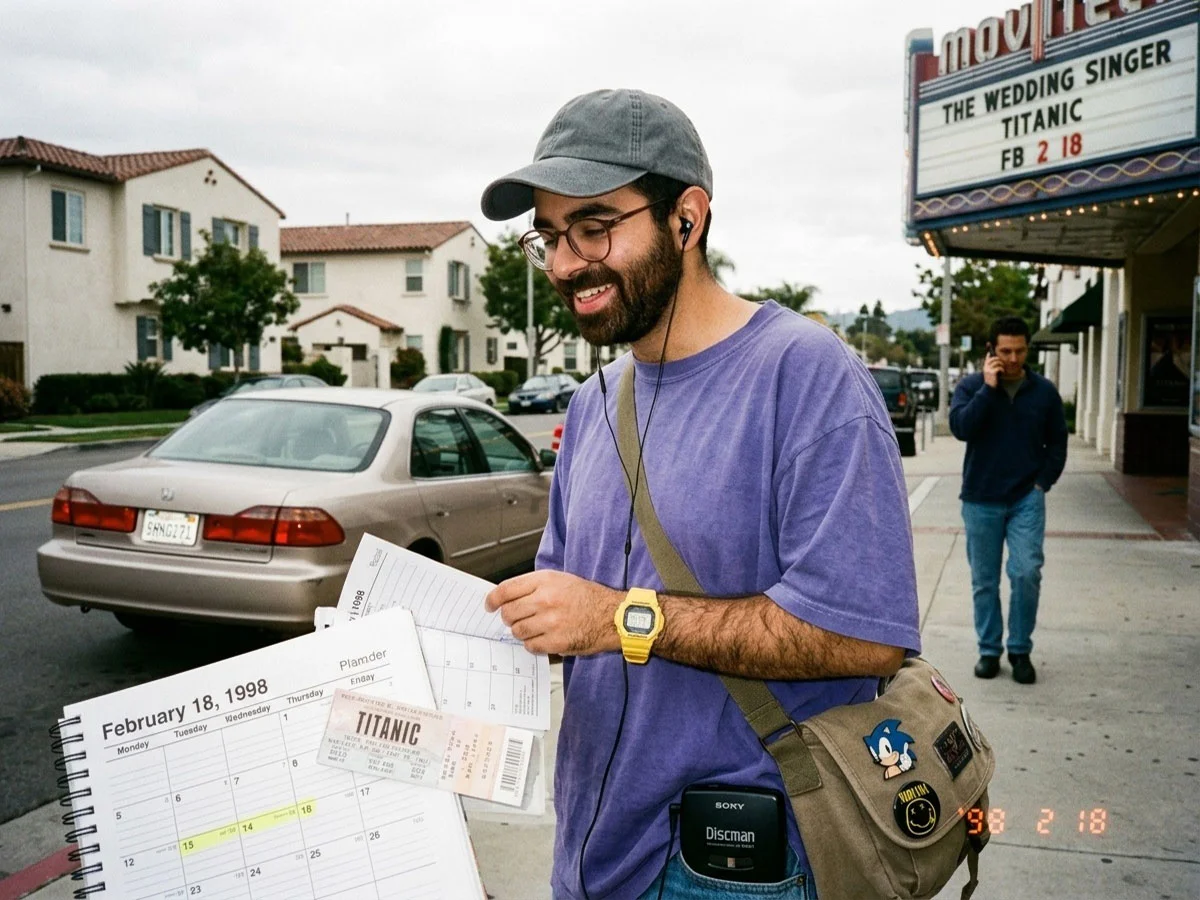
February 18, 1998
February 18, 1998
Wednesday, February 18, 1998, was the 49th day of the year. In the United States, Bill Clinton was president, the country was experiencing a strong economic expansion, the Internet was still in its early commercial era, and most people still depended on newspapers, television and radio for their daily news.
It was also a remarkable moment in history: the world was watching the confrontation between the United States and Iraq, the Clinton–Monica Lewinsky scandal was dominating American politics, and California was dealing with the powerful effects of El Niño.
• Population: How many people lived in the United States?
On July 1, 1998, the U.S. population was estimated at approximately 270.25 million people. That was about 20 million fewer people than the United States had two decades later.
• California was already the nation's most populous state. Its population in the late 1990s was approximately 32–33 million residents.
For comparison, California had approximately 29.8 million people in the 1990 Census and 33.9 million in the 2000 Census.
• What about Whittier?
Whittier was considerably smaller than it is today. The official 2000 Census counted 83,680 residents in the City of Whittier.
The city's population around 1998 was therefore approximately 82,000–83,000 people.
So, if you were walking around Whittier on February 18, 1998, you were living in a community of roughly eighty-something thousand people, surrounded by a Los Angeles metropolitan area that was already enormous but still looked considerably different from today's Southern California.
One of the dominant international stories was the confrontation between the United States and Iraq over United Nations weapons inspections.
President Bill Clinton was considering military action against Saddam Hussein's government. Television news coverage on February 18 prominently featured Iraq-U.S. relations and the possibility of military action.
The crisis was serious enough that newspapers and television were discussing the possibility of American military strikes.
Another major international story involved Afghanistan.
Earlier in February, a devastating earthquake had struck Afghanistan, killing thousands of people. On February 18, the Washington Post reported on the Taliban sending relief supplies to earthquake survivors.
And then there were the 1998 Winter Olympics in Nagano, Japan, which were underway from February 7 through February 22.
American audiences were following Olympic hockey, figure skating, skiing and speed skating. The United States men's hockey team was struggling in the tournament, while figure skating was receiving enormous attention.
Historical NOAA-based weather data for Los Angeles shows:
February 18, 1998
High: 64°F
Low: 45°F
Rainfall: 0.00 inches
But the days immediately before and after tell the larger story.
February 16 brought about 0.20 inches of rain, followed by 0.31 inches on February 17. Then February 19 brought another 0.80 inches.
The month itself was extremely wet.
For example:
February 2: 0.57 inches
February 3: 3.10 inches
February 6: 1.40 inches
February 7: 1.23 inches
February 8: 0.50 inches
February 14: 2.09 inches
This was one of the defining weather stories of Southern California in 1998.
Gasoline was remarkably inexpensive compared with today's prices.
The Federal Reserve's historical series for Los Angeles–Long Beach–Anaheim shows an average gasoline price of approximately:
$1.19 per gallon in February 1998
The January 1998 average was about $1.31, and by March it had fallen to approximately $1.11.
That means filling a 15-gallon vehicle could cost approximately $17.85.
For someone accustomed to today's gasoline prices, that sounds almost unbelievable.
Exact prices on February 18, 1998 specifically in Los Angeles are much harder to establish because supermarket prices varied by store, brand and weekly specials.
However, contemporary 1998 price records provide a useful picture.
A historical 1998 grocery-price reference lists:
• Milk, skim — about $2.29 per gallon
• Coca-Cola — about $0.89 for a 2-liter bottle
• Eggs — about $0.99/dozen
• Chicken — about $1.29/lb.
• Ground sirloin — about $1.79/lb.
And Los Angeles was also part of the entertainment world's attention as Hollywood prepared for the 70th Academy Awards, with films such as Titanic, L.A. Confidential, Good Will Hunting and As Good as It Gets among the major nominees.
Perhaps the biggest difference between February 18, 1998 and today was technology.
Google had not yet become the dominant search engine.
Facebook did not exist.
YouTube did not exist.
The iPhone did not exist.
Social media as we know it did not exist.
Many households were still connecting to the Internet through dial-up modems.
Email was becoming increasingly common, but smartphones were still years away.
If someone had told a Whittier resident in 1998 that within a few decades they would carry a small computer in their pocket capable of making video calls, navigating anywhere in the world, watching movies, taking high-resolution photographs and using artificial intelligence, it would have sounded like science fiction.
Imagine waking up in Whittier on Wednesday, February 18, 1998.
Gasoline was around $1.19 a gallon in the Los Angeles area. A gallon of milk could be around $2.29. A 2-liter soda could be less than a dollar. Your morning news probably came from the newspaper, television or radio.
You might have watched the Winter Olympics that evening.
You would have heard about Iraq and the possibility of another American military confrontation.
You would have heard about President Clinton and the growing Lewinsky scandal.
And if you lived in Southern California, you were probably paying attention to the sky, the rain and the latest El Niño storm.
The United States had approximately 270 million people, California had roughly 33 million, and Whittier had roughly 82,000–83,000.
It was a world that seems familiar—and yet remarkably distant.
Twenty-eight years later, February 18, 1998, provides a fascinating time capsule of a country standing at the threshold between the 20th century and the digital age.